America needs to commit to transportation policies that will at least double the number of people who travel by foot, bike or transit by 2030, a leading advocacy group argues.
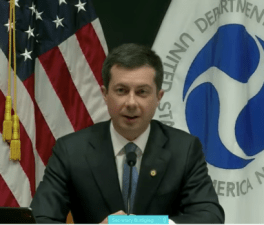
Buttigieg presented an ambitious vision for a more just and sustainable transportation system in the U.S. We’ll be eagerly following the funding, regulation and policy specifics of how this vision can be realized.
Talking to the new Urban Institute honcho about projects added to his transit inventory, the new infrastructure bill and a look back at our predictions from last year.
A coalition of leading transportation professionals is pushing for an overhaul of the manual that sets many of the most dangerous design guidelines for our car-focused roads — and rejecting a piecemeal public comment process that they say will only put a band-aids over the gaping wounds in our unsafe national transportation standards.
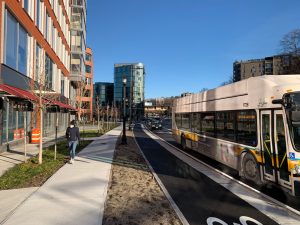
The newly-adopted controlling criteria for bike, pedestrian, and transit facilities lay out minimum standards to help ensure that all roadway users are considered from the beginning of a project's design process.
"There are concerns we have that this would be enforced through police interactions, and we know those to be inherently inequitable, and that they lead to more drastic incidents for people of color."
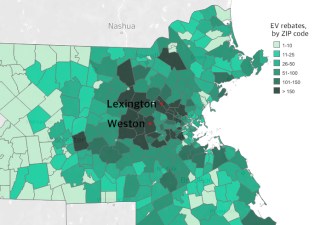
Governor Baker's climate plan focuses most of its attention on subsidizing electric car purchases, and generally dismisses the potential of reducing pollution with transit-oriented development or expanded transit services.
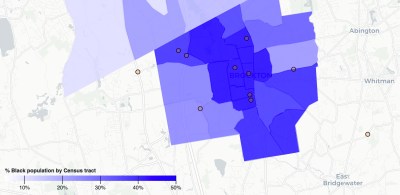
Of the 210 fatal car crashes in Massachusetts where a driver killed a bike rider or pedestrian between 2018 and 2020, a quarter of those killings occurred in neighborhoods where the Black population makes up a higher-than-average proportion of the neighborhood population, according to a Streetsblog analysis of MassDOT fatal crash records. According to U.S. […]
Since 1982, federal transportation funding has been governed by the "80-20 split," which restricts the federal Department of Transportation from spending more than 20 percent of its Highway Trust Fund money on transit projects, leaving the majority of federal funding for highway projects.