Increased working from home appears to have diminished bike traffic in cities like Boston and Cambridge, but considerably more people are walking and riding in the rest of the state.
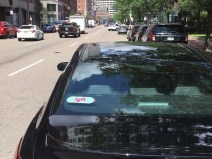
Most Uber and Lyft trips aren’t bolstering transportation options in transit deserts, but are being taken in majority white and more affluent neighborhoods.
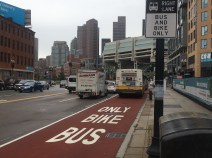
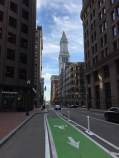
"We've been able to build out a set of bike lanes that serve as a hub for the bike network that courses into Boston's downtown," says Chris Osgood, Boston's Chief of Streets.
The Massachusetts Senate has unanimously passed a $46 billion budget for the current fiscal year, but while the final legislation includes an amendment that will raise fees on Uber, Lyft, and other app-based ride-hailing companies, those additional funds are unlikely to help the MBTA, which faces a severe deficit and is planning a dramatic suite […]
The Massachusetts Department of Transportation has committed to establishing a new bus lanes on the Tobin Bridge and I-93 as part of a legal settlement over its decision to eliminate a carpool lane on I-93 in the spring of 2019. The Conservation Law Foundation (CLF), a Boston-based environmental group, filed an intent to sue MassDOT […]
The complex, multi-lane intersection of Blue Hill Avenue, Blue Hills Parkway, and Brush Hill Road has been identified as a "high-crash cluster" with two dozen injury-causing crashes recorded since 2017.
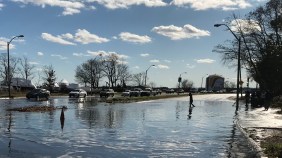
Major redevelopment schemes and the city's climate resiliency strategy all hinge on a plan that doesn’t exist yet: how Morrissey Boulevard will be rebuilt for a future with higher sea levels and fewer motor vehicles.